
How to transport heavy equipment and containers without stress
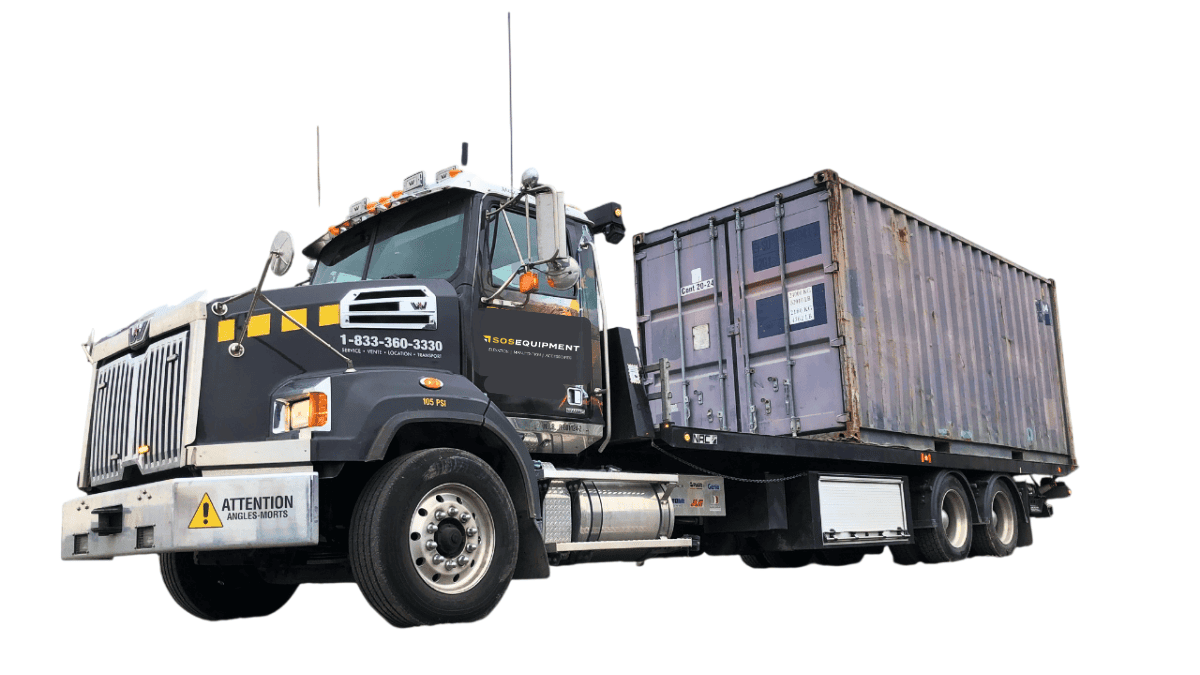
How to transport heavy equipment and containers without stress: best practices
Here are the essential instructions.
1. Accurately assess weight and dimensions
Before shipping:
- Confirm actual weight (up to 50,000 lb in many specialized cases)
- Check overall height on trailer
- Identifying overruns
2. Check required permits
For non-standard loads :
- Special transport permit
- Route planning
- Municipal restrictions
 Consult the requirements for road transport on the Ministère des Transports du Québec
3. Choosing a carrier specialized in heavy equipment
A general carrier is not always suitable.
You must search for :
- Certified operators
- Worksite experience
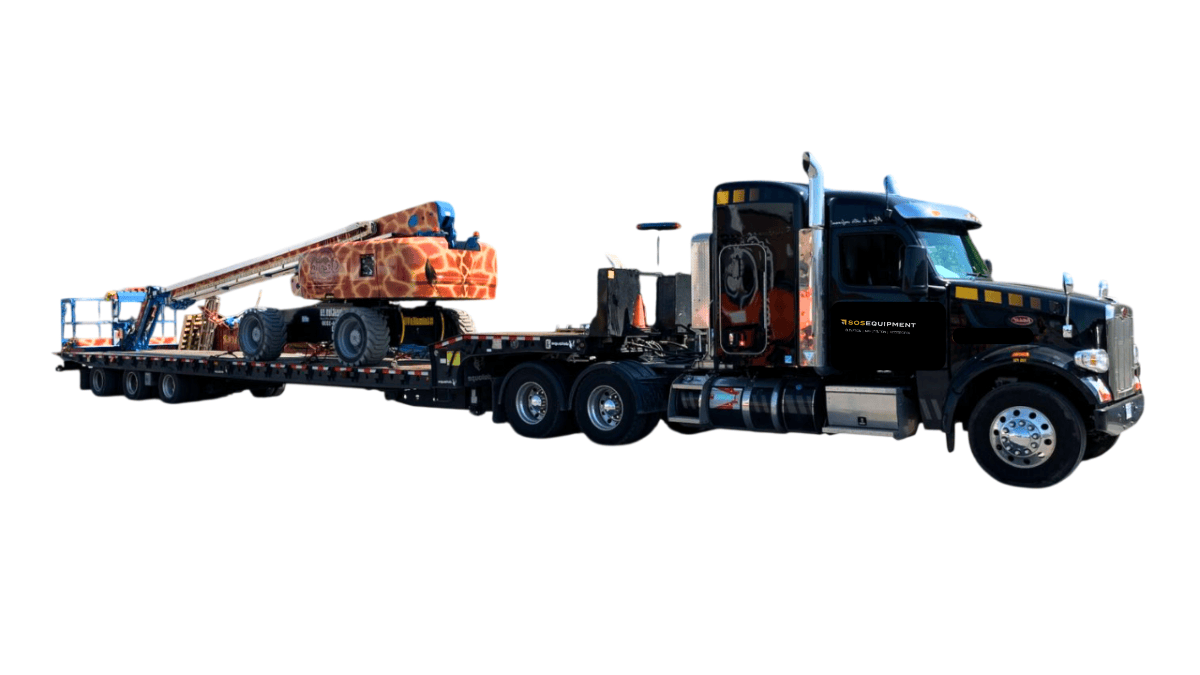
- Adapted trailers (trailers, platforms)
- Full insurance
- Knowledge of provincial regulations
4. Plan site logistics
Good transport includes :
- Coordination with the foreman
- Access confirmation
- Validation of floor and unloading areas
- Real-time communication
5. Provide specific information
The smooth running of operations on the site requires :
- Hours when equipment is needed on site
- Municipal restrictions on pick-up and delivery times
- Parking zone restrictions
- Weight and dimensions of equipment to be transported
- Help with delivery and pick-up when transport units are on site (flagman, day laborer, equipment operator, etc.).
- Site restrictions and best practices to be aware of
Why entrust your transport to SOSEQUIPMENT?
At the house of SOSEQUIPMENT, Transportation is not an ancillary service. It is a direct extension of our expertise in :
- Lifting equipment
- Handling
- Specialized accessories
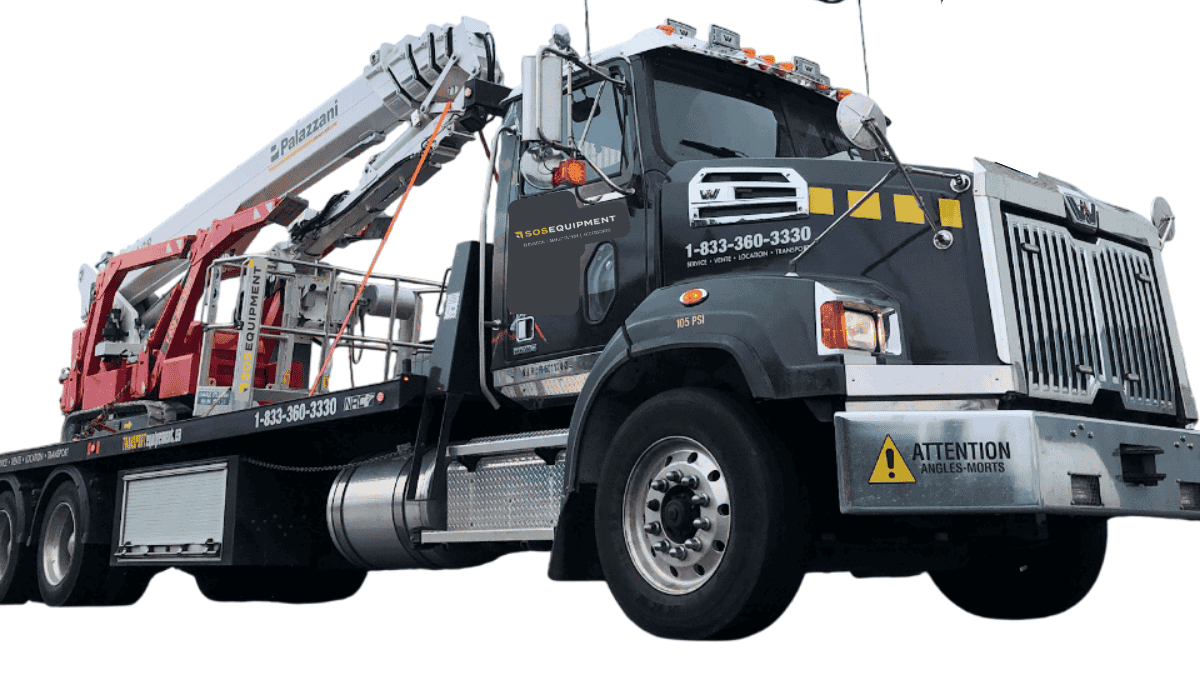
 Transport compliant with regulations Quebec and Ontario Certified and experienced drivers with a wide range of standard and complex equipment Transport of heavy equipment and containers up to 50,000 pounds Service tailored to the reality of construction sites Full coverage Quebec and Ontario Professional, reliable coordination
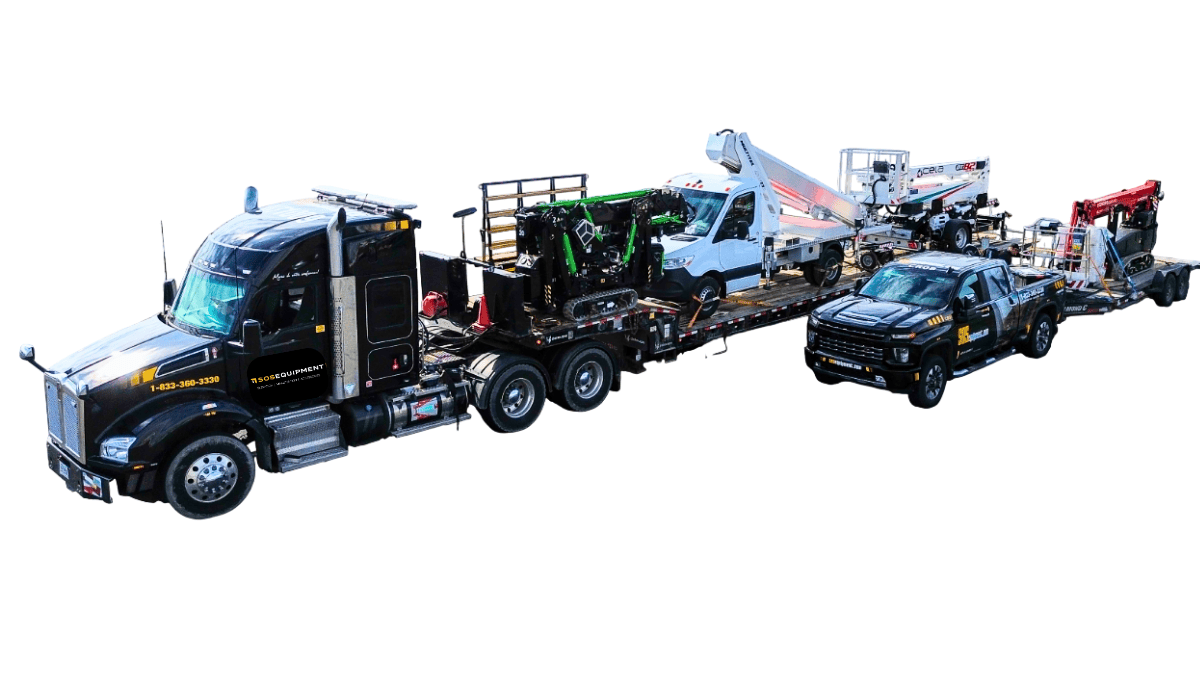
What's more, our wide range of vehicles and trailers to ensure smooth transport:
- Specialized trailers
- Tractors with 53′ Landoll-type trailer
- Pick-ups with tipping trailer
- Etc.
Find out more about our specialized transport now:
Conclusion: Stress-free transport starts with the right team
Transporting heavy equipment and containers should never be improvised.
Compliance, safety and coordination are essential.
By choosing a specialized partner like SOSEQUIPMENT, you eliminate:
- Regulatory risks
- Unnecessary delays
- Logistical contingencies
Request a quote for your equipment transport starting today: