For quick assistance
IMG_2937
Blog
Case Study - How to install heavy glazing in a confined space - lifting the glass

How to install heavy glazing in a confined space: a case study at Longueuil–Université-de-Sherbrooke metro station

How to install a heavy pane of glass in a confined space? When a large-format glazing must be replaced at height, logistical challenges can quickly become as significant as the work itself. Limited access, pedestrian traffic, the weight of the glass, safety constraints, and tight spaces often complicate operations.

In this case study conducted at the Longueuil–Université-de-Sherbrooke metro station, our team participated in an intervention that required the replacement of a green roof pane located on the third floor of the building.

Discover the main challenges encountered, the criteria that guided the choice of equipment, and the elements to consider when a project heavy glazing handling must be carried out in a complex environment.

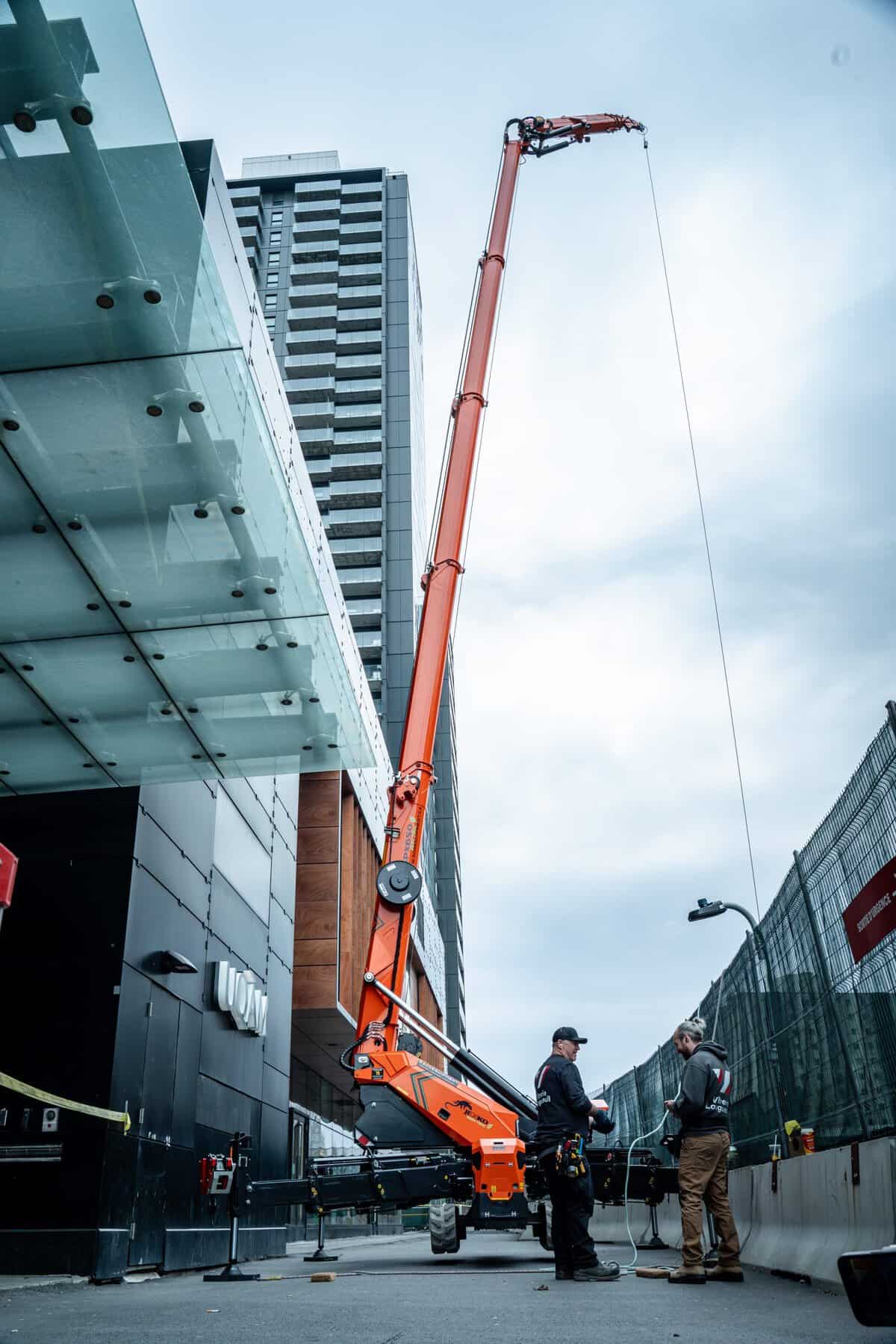
Construction site with restricted access for glass replacement

What are the challenges when replacing heavy glazing at height?

Replacing large architectural glazing generally involves several simultaneous constraints:

The weight of the load

In this project, the glass panel weighed nearly 500 lbs.

Beyond its weight, the fragile nature of the material requires precise control of movements to avoid any twisting or impact that could damage the piece.

Installation height

The glazing had to be transported to a green roof located on the third floor.

The operation therefore required sufficient reach while maintaining maximum precision during final positioning.

A restricted workspace

The environment surrounding the building presented several limitations:

  • Reduced work area;
  • Limited ground access;
  • Presence of pedestrian traffic;
  • Inability to use certain conventional lifting equipment.

Security requirements

The work was to be carried out while maintaining an environment secure for

  • The workers;
  • Website users;
  • The glass itself during lifting operations.
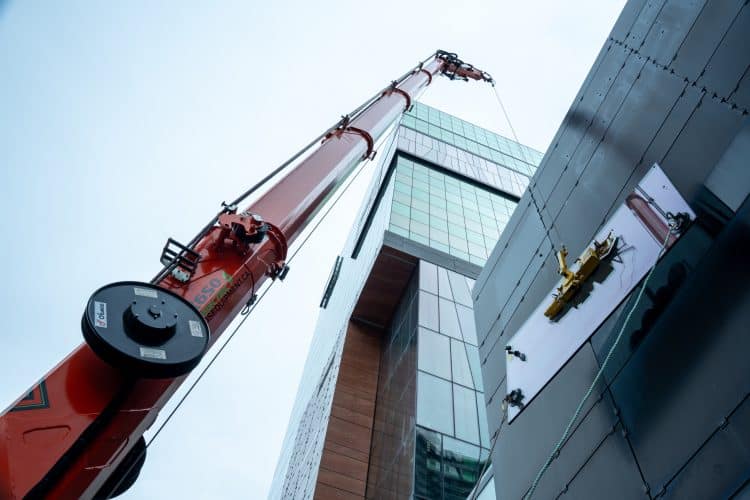
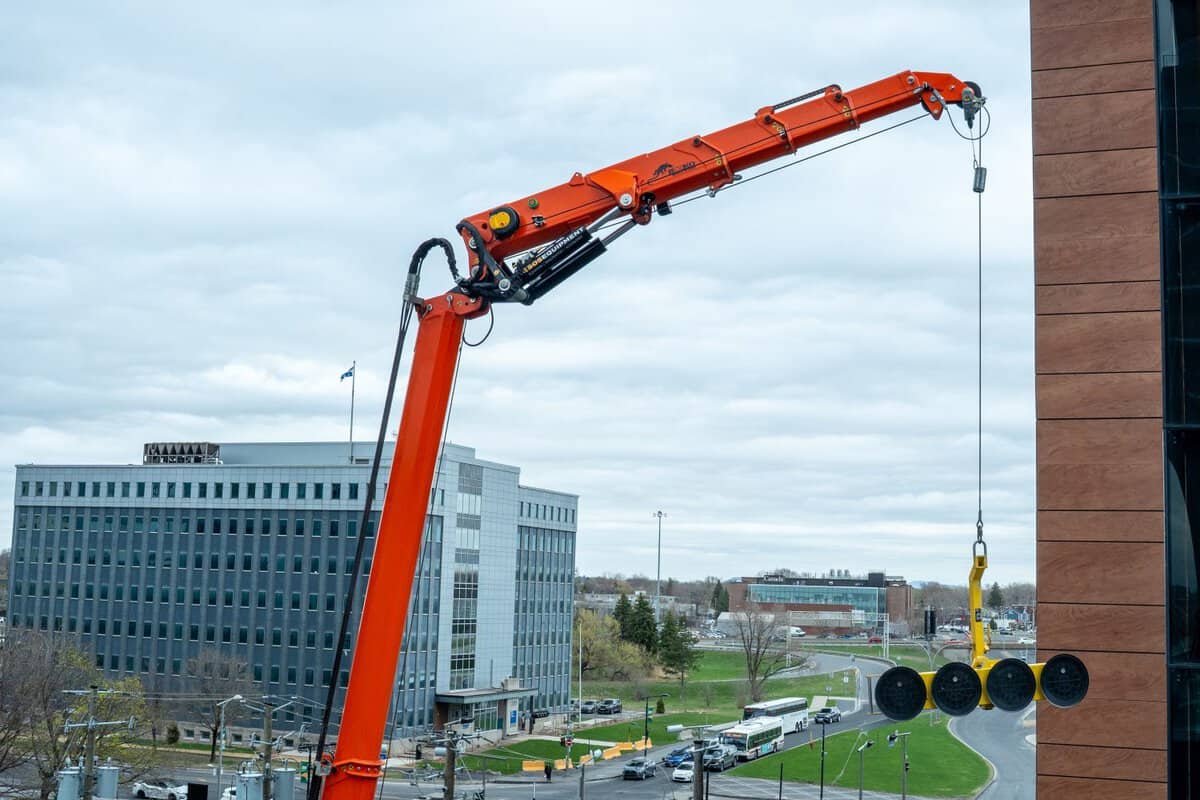
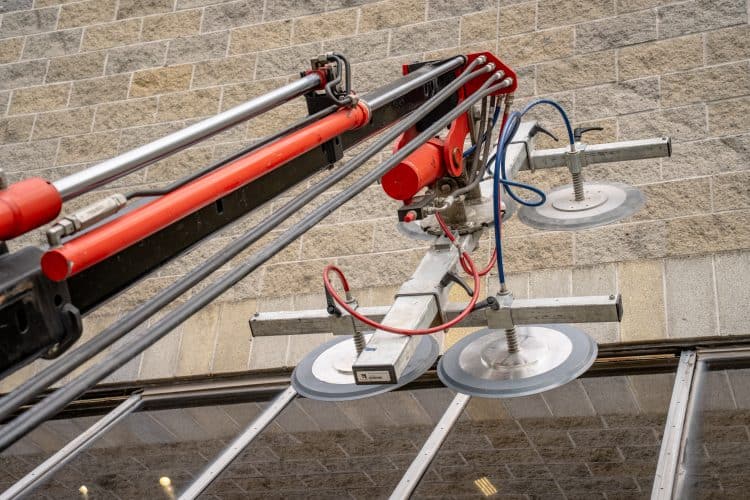
Safe handling of glazing with a vacuum beam lifter

How do you choose the right lifting equipment for this type of project?

Before selecting equipment, several questions must be analyzed:

Can the machine access the construction site?

In several urban projects, access capacity is often more critical than lifting capacity itself.

Does the machine have enough reach?

The equipment must reach the work area without compromising its stability.

Is the positioning precise enough?

When it comes to installing glass, a few millimeters can make all the difference.

Does the solution minimize site disruptions?

Rapid intervention often reduces the impacts on the client's operations and on traffic flow.

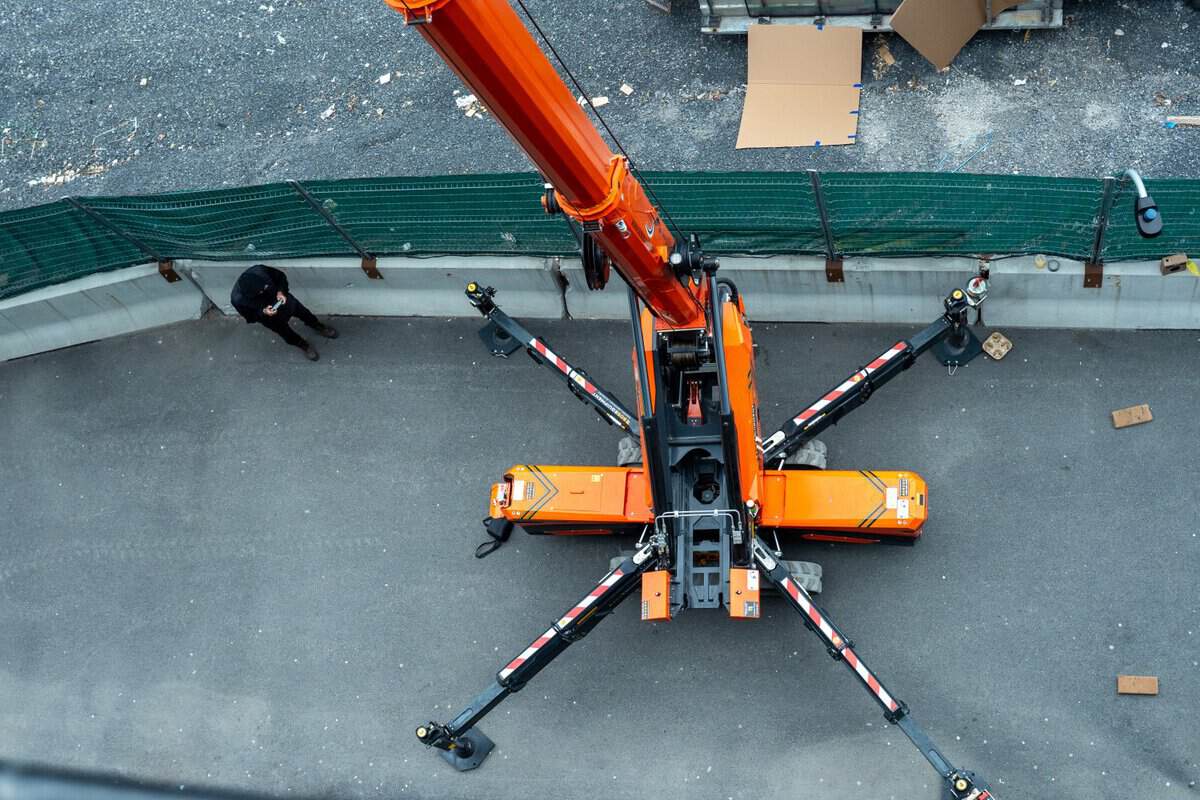
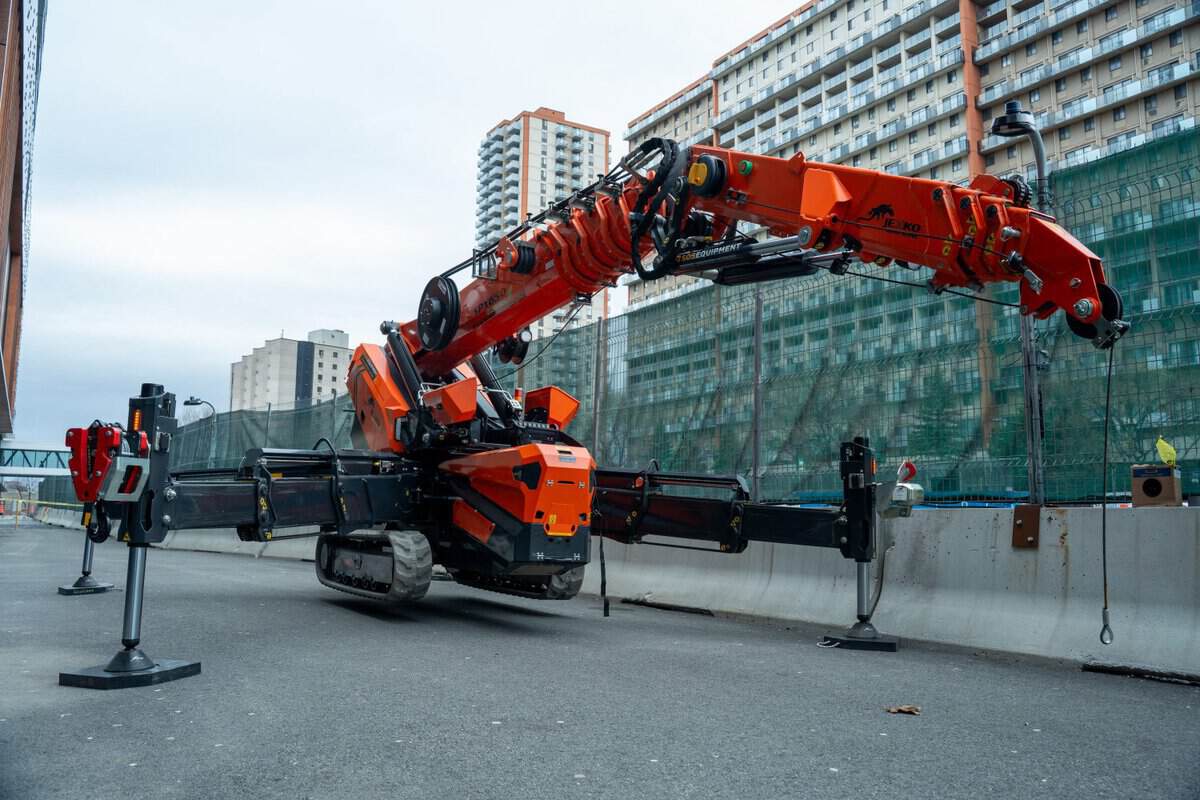
Mini crawler crane JEKKO SPX650 on urban construction site

Case Study: Window Replacement at Longueuil–Université-de-Sherbrooke Metro Station

After analyzing the project’s constraints, the solution selected was to use a JEKKO SPX650 mini crawler crane equipped with:

  • of a hydraulic jib;
  • a suction cup lifting bar;
  • a remote control system.

This configuration made it possible to handle glass safely while keeping a precise movement control.

Close-up of the JEKKO SPX650 mini crawler crane

Why was the JEKKO SPX650 chosen?

Suitable lifting capacity

The SPX650 offers a Maximum lifting capacity of 5,000 kg (11,023 lb), making it easy to handle heavy loads in complex environments.

An excellent vertical reach

With a height of lifting up to 23.7 m, the equipment meets the needs of many glazing, metal structure, and maintenance projects.

Great positioning accuracy

The addition of Hydraulic jack allowed for the necessary adjustments to be made during the installation of the glazing.

Mobility adapted to confined spaces

Thanks to its extendable tracks and its rotation continues at 360°, the machine can operate in areas where conventional cranes quickly reach their limits.

A high-performance solution for glazing work

The manufacturer also identifies the installation of glazing as one of the main applications for the SPX650.

Discover the complete technical sheet

Project result

The intervention allowed:

  • The safe replacement glazing;
  • The respect site constraints;
  • A reduced mobilization of human resources;
  • Maintaining a high level of security;
  • A reopening fast of the pedestrian crossing;
  • The satisfaction from the client.

Watch the project video

When to consider a mini crawler crane for a glazing project?

A mini crawler crane can be a particularly interesting solution when:

  • The floor space is limited.;
  • access is difficult;
  • the expenses are high;
  • A high degree of positioning accuracy is required.;
  • user safety must be preserved;
  • Operations interruptions must be minimized.

Conclusion

Replacing heavy glazing in an urban environment requires more than just lifting capacity. The analysis of access, of the security, of the precision required and of site constraints is essential to ensure the project's success.

This intervention carried out at the Longueuil–Université-de-Sherbrooke metro station demonstrates that a Compact and specialized lifting solution can effectively address challenges that would be difficult to solve with conventional equipment.

Need a lifting solution for a complex project?

Do you need to install glazing, move a heavy load in a confined space, or plan specialized intervention?

Discover our rental service mini-crawler crane JEKKO SPX650 Or contact the team SOSEQUIPMENT to analyze your project.

Request a quote for renting a JEKKO SPX650 mini crane

Read more on our website

You Might Also Like

Call me back